Cat Body Language Cheat Sheet: Signals, Tails & Meows
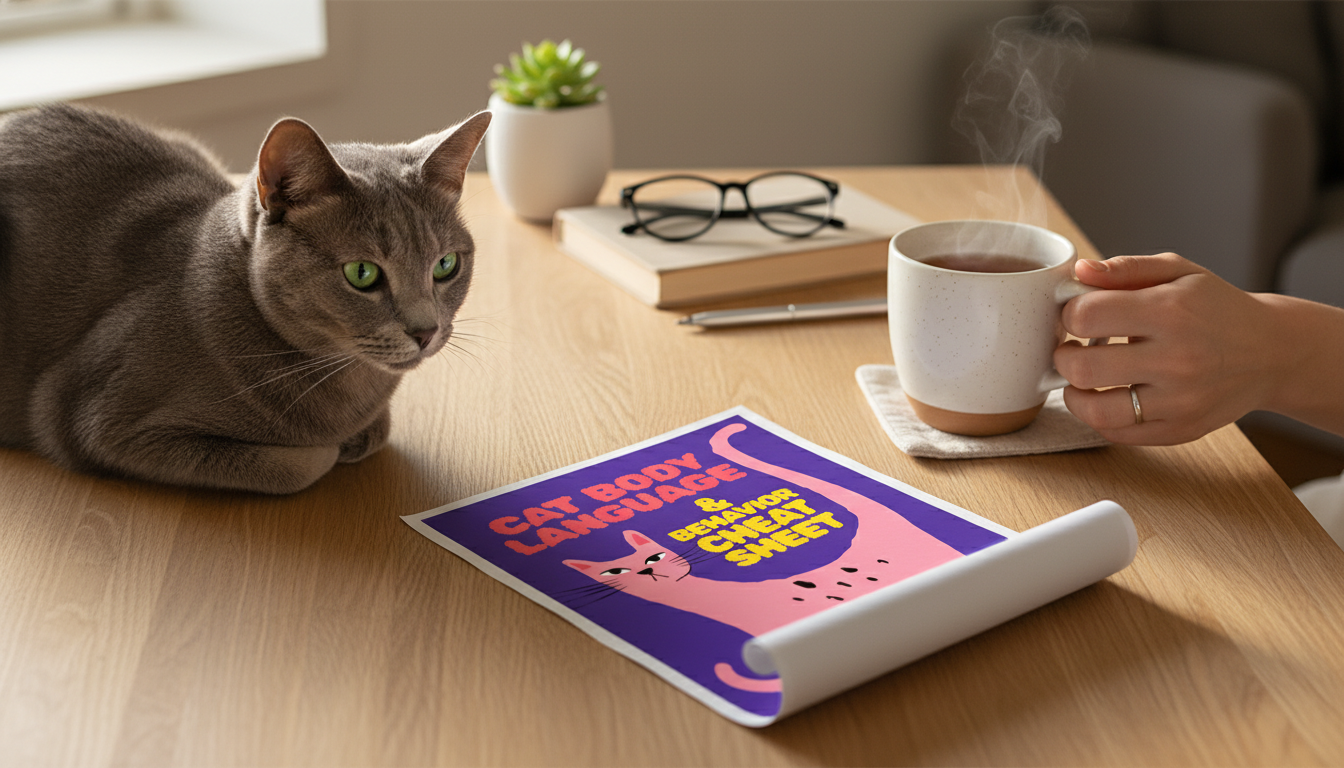
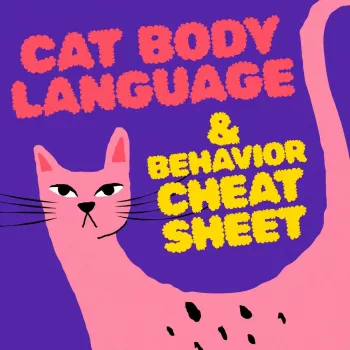
Cat Body Language & Behavior Cheat Sheet: A Printable Guide to Signals, Postures, and Meows
Cats communicate constantly—just not always in ways humans expect. Learning to read ears, tail, eyes, posture, and vocalizations can help prevent bites and scratches, reduce stress, and build trust faster (especially with shy cats, kids, or recent rescues). The goal isn’t to “decode” one signal in isolation; it’s to notice patterns and respond in a way that makes your cat feel safe and understood.
How Cats Communicate: The Full Picture
Body language usually speaks louder than meows, so start with posture, tail, ears, and eyes. Context matters: a tail that’s high during play can look similar to a “confident greeting” until you notice tense muscles or quick, sharp movements. Try to read clusters of signals (ear position + tail + pupil size + muscle tension) rather than betting everything on a single sign.
Most importantly, respect thresholds. Subtle stress signals often show up before hissing, swatting, or bolting—like a tail-tip twitch, ears rotating sideways, or a sudden freeze. Catching those early keeps interactions calm and helps your cat stay social instead of defensive.
Quick-Read Cheat Sheet: Signals and What to Do Next
Use the table below as a fast way to translate common signals into safer handling choices. When unsure, pause interaction and offer space; relaxed cats re-engage on their own terms.
| Signal | What it can mean | What to do |
|---|---|---|
| Tail upright with a relaxed tip | Friendly greeting, comfort | Offer a gentle hello; allow sniffing and initiate petting slowly |
| Tail puffed up | Fear or high arousal | Stop approach; give distance; reduce noise and movement |
| Tail swishing or thumping | Irritation, conflict, overstimulation | End petting/play; redirect to a toy; let the cat reset |
| Ears forward | Curious, engaged | Continue calmly; reward relaxed behavior |
| Ears flattened sideways/back | Anxious, defensive, overstimulated | Pause interaction; avoid reaching over the head; give space |
| Slow blink | Affiliative, relaxed | Slow blink back; keep a soft voice; offer gentle contact if invited |
| Wide pupils + tense body | Stress, fear, excitement, or pain | Check environment; stop handling; consider pain or vet concerns if persistent |
| Crouched low, hiding | Fear, insecurity, illness | Provide a safe hide; avoid forcing contact; monitor appetite/litter box |
| Arched back + piloerection | Defensive display or startle response | Do not pick up; create an escape route; disengage |
| Belly exposed | Trust or self-protection (not always an invite) | Avoid belly rubs unless clearly enjoyed; pet head/cheeks instead |
| Head bunting/cheek rubbing | Scent marking, affection | Allow it; offer a hand to rub; reinforce with calm attention |
| Kneading | Comfort, bonding, self-soothing | Let it happen; place a blanket if claws are sharp |
Tail and Posture: Reading Confidence vs. Concern
An upright posture with loose muscles often signals comfort—your cat feels safe enough to be tall, fluid, and curious. Stiff, low posture suggests caution, especially when paired with stillness or a tucked tail. A sideways stance can be a defensive strategy to look larger; avoid cornering and give an easy escape route.
Watch the tail tip: a small twitch can be the first hint of building arousal. If tail movement escalates into swishing or thumping during petting, your best move is usually to stop touching, pause your hands, and let your cat decide whether to re-engage. During play, posture can look intense; look for bouncy movement, relaxed facial muscles, and “self-handicapping” (your cat briefly backing off or choosing not to use full force).
Ears, Eyes, and Whiskers: The “Mood Dashboard”
Ears rotate like radar. Forward ears often indicate interest, while rapid flicks can signal uncertainty or rising overstimulation. Ears flattened sideways or back commonly show discomfort or defensiveness—particularly if the body is tense.
Pupil changes can reflect lighting, excitement, fear, or pain, so pair pupil size with the rest of the body. Soft eyes and slow blinks typically indicate ease; a hard stare can precede conflict, especially in multi-cat homes. Whiskers also help: forward whiskers suggest interest (often seen when investigating food, toys, or a new person), while whiskers pinned back can show stress.
Meows, Trills, and Other Sounds (and What They Often Mean)
Touch and Handling: Avoiding Overstimulation Bites
Multi-Cat and New-Home Signals: When to Slow Down
Printable Cheat Sheet: A Quick Reference for Daily Use
If you want a ready-to-print option, the Cat Body Language & Behavior Cheat Sheet | Printable Cat Communication Guide | Learn Feline Signals, Postures & Meows is designed for quick daily reference. For families practicing calmer routines and clearer boundaries (which can make cat interactions smoother for kids), the Talk & Connect: Parent-Child Communication Workbook – Positive Parenting Guide for Stronger Family Bonds, Conversation Starters, and Emotional Connection can support consistent “pause and check” habits at home.
For deeper behavior and welfare guidance, consult trusted resources like the American Association of Feline Practitioners (AAFP) Cat Friendly resources, International Cat Care advice on behavior, and the ASPCA cat care and behavior library.
FAQ
Does a cat showing its belly mean it wants a belly rub?
Not always. A belly display can signal trust, but it can also be a self-protective posture; wait for clear consent cues (relaxed body, inviting head rubs, no grabbing of your hand) and stick to safer areas like cheeks and chin if you’re unsure.
Why does my cat purr while seeming upset or at the vet?
Purring can be self-soothing as well as a sign of comfort. Look at the full body picture—tense posture, flattened ears, or wide pupils can indicate stress or pain, and persistent discomfort signs warrant a vet discussion.
What does tail swishing mean during petting?
Tail swishing during petting often signals rising arousal or overstimulation. Pause immediately, switch to brief cheek scratches only if your cat stays relaxed, or end the session before it escalates into a nip.










Leave a comment