4-Week Fit-at-Home Plan: Minimal Gear, Daily Workouts
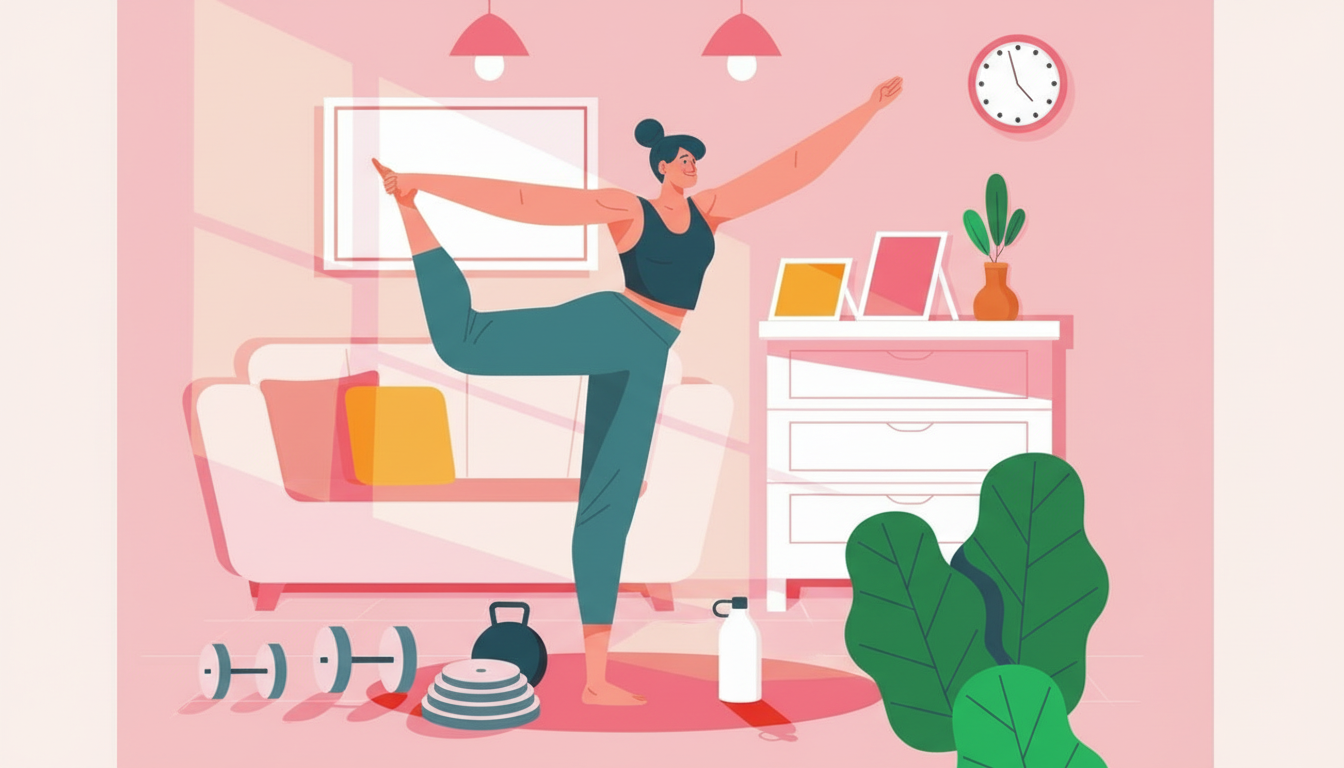
Fit at Home: A 4-Week Minimal-Equipment Routine with Daily Workouts and Stretches
A simple home routine works best when it’s clear, repeatable, and easy to scale. This 4-week approach uses minimal equipment, short daily sessions, and built-in stretching so strength, mobility, and consistency improve together. The goal is steady progress without turning your living room into a full gym—or turning workouts into a second job. For more guidance, see [PDF] No Equipment Home Workouts: strength workouts – UT RecSports.
What “minimal equipment” really means (and what can substitute)
Minimal equipment isn’t “no equipment.” It means choosing a few versatile tools that cover the basic movement patterns (squat, hinge, push, pull, core) while keeping setup time close to zero. For further reading, see [PDF] HOME WORKOUT PLAN.
- Useful basics: a yoga mat, a light-to-medium resistance band, and (optional) one moderate dumbbell or kettlebell.
- Household swaps: a backpack loaded with books for extra resistance, a sturdy chair for step-ups and triceps work, and towels for sliding hamstring curls on smooth floors.
- Space needs: a clear area about the size of a yoga mat plus arm reach. Keep the surface non-slip and well lit so form stays clean.
How to set up the week so it stays doable
Consistency comes from a schedule you can repeat, not a “perfect” plan you abandon after a few days. A sustainable structure is 5 workout days + 2 lighter days (mobility, walking, or full rest) to reduce burnout while still building momentum.
- Time-box sessions: 20–40 minutes for workouts, then 5–10 minutes of stretching.
- Use a reliable time trigger: after coffee, after school pickup, or before a shower—anything that naturally happens most days.
- Track the basics: the exercise, sets, reps, and how hard it felt (easy/medium/hard). That’s enough to guide progress.
| Day | Focus | Workout time | Stretch time |
|---|---|---|---|
| Mon | Lower body + core | 25–40 min | 5–10 min |
| Tue | Upper body + posture | 20–35 min | 5–10 min |
| Wed | Mobility + light cardio (walk/low-impact) | 20–30 min | 10 min |
| Thu | Full-body strength | 25–40 min | 5–10 min |
| Fri | Core + conditioning (low impact) | 20–30 min | 5–10 min |
| Sat | Active recovery (easy walk, gentle yoga) | 20–45 min | 10 min |
| Sun | Rest or short reset stretch | 0–10 min | 5–10 min |
Warm-up that fits any day (5 minutes)
A short warm-up improves movement quality and makes the first set feel less stiff. Keep it simple and repeatable.
- 1 minute: marching in place or step touches to raise temperature.
- 1 minute: hip hinges + arm swings (smooth, controlled).
- 1 minute: bodyweight squats to comfortable depth + shoulder rolls.
- 1 minute: plank walkouts or wall push-ups (easy version).
- 1 minute: deep breaths + gentle spine rotations to finish priming.
Daily workout building blocks (simple templates)
Instead of chasing random workouts, rotate a few templates that cover your whole body each week. This keeps progress measurable and joints happier over time.
Lower body day
- Squat pattern: bodyweight squat, goblet squat (with dumbbell/kettlebell), or chair box squat.
- Hinge pattern: hip hinge, Romanian deadlift with a backpack, or glute bridge.
- Unilateral: reverse lunge, split squat, or chair step-ups.
- Calves: standing calf raises (hold a chair for balance).
- Core finisher: dead bug, plank, or side plank.
Upper body day
- Push: incline push-ups on a counter, floor push-ups, or band chest press.
- Pull: band rows (anchor around a sturdy post) or towel rows if you have a safe setup.
- Shoulder stability: band pull-aparts or “Y-T-W” raises with light load.
- Arms: band triceps pressdowns and biceps curls.
- Posture drill: wall slides or chin tucks (controlled, not forced).
Full-body day
Pick 4–6 moves and run them as a circuit (2–4 rounds): squat, hinge, push, pull, carry/hold (like a suitcase hold with a dumbbell or backpack), and a core move.
Conditioning day (low impact)
Use intervals that elevate breathing without pounding your joints: step-ups, marching intervals, shadow boxing, or brisk walking blocks. Keep it conversational-to-challenging, not all-out.
Progression across 4 weeks without overcomplicating it
You’ll get more results from small, planned increases than from sporadic “hard days.” Use one progression lever at a time: reps, sets, tempo, holds, or load.
- Week 1: learn form; stop each set with 2–3 reps in reserve (you could do a few more if needed).
- Week 2: add 1 set to 1–2 key exercises or add 2 reps per set.
- Week 3: increase difficulty slightly (slower tempo, longer holds, or a bit more load).
- Week 4: keep form and consistency; test a small benchmark (plank time, push-up reps, squat depth control).
For general health targets, the CDC’s Physical Activity Guidelines and the ACSM’s resistance training guidance are useful references for balancing strength and aerobic work.
Daily stretches that match home training (8–10 minutes)
Common mistakes that stall progress (and quick fixes)
Who this routine fits best (and how to adjust)
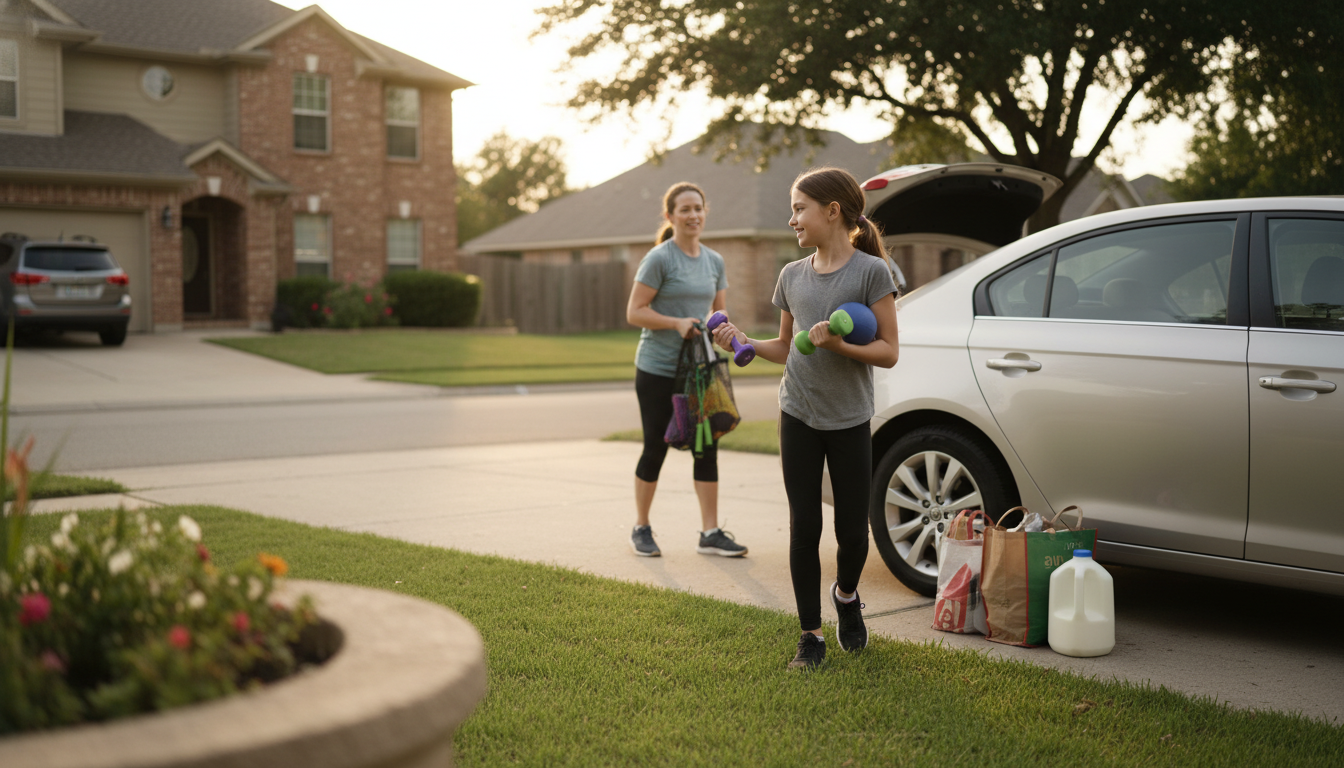
For kids and teens, strength work can be appropriate when it’s supervised and focused on technique. The American Academy of Pediatrics guidance on youth strength training is a helpful starting point.
Using a structured PDF plan for consistency
- Fit at Home: 4-Week Workout Plan (PDF)
- Healthy Meal Plan & Recipe Collection
- Talk & Connect: Parent-Child Communication Workbook
FAQ
Can a 12 year old workout at home?
Yes, with supervision and age-appropriate training that emphasizes bodyweight movements, coordination, and light resistance. Keep sessions short, prioritize good form, include rest days, and consult a pediatrician or qualified coach if there’s pain or a medical concern.
How long should daily home workouts be to see progress?
Many people see progress with consistent 20–40 minute sessions 4–5 days per week plus short daily stretching. If time is tight, start with 15–20 minutes and build gradually as recovery and habits improve.









Leave a comment