New Puppy Training Plan: 4-Week Routine for Success
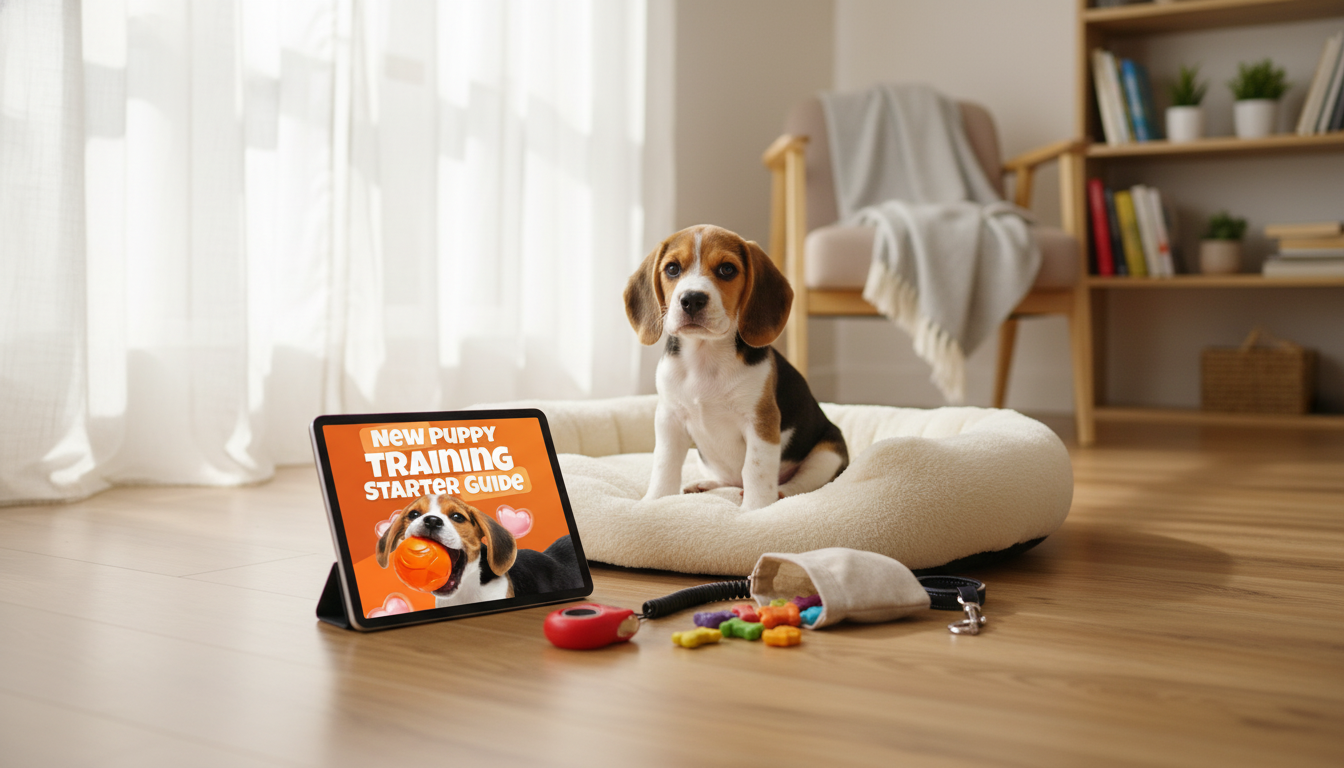
New Puppy Training Starter Guide: A 4-Week Routine for House Training, Manners, and Social Skills
A consistent routine in the first month helps a puppy learn faster and feel secure. The goal isn’t perfection—it’s building predictable habits: potty timing, calm crate practice, bite inhibition, core cues, and safe socialization. Use the plan below as a simple daily framework, then adjust based on your puppy’s age, progress, and your veterinarian’s guidance.
What to Set Up Before Day 1
- Pick one potty location and one door. Choose a potty spot outdoors, a short leash route to get there, and the same door for every bathroom trip to reduce confusion.
- Set up a crate or puppy pen. Size it so your puppy can stand up, turn around, and lie down comfortably. Add a washable mat if chewing is minimal, or keep it simple at first if your pup shreds bedding.
- Choose two reward levels. Use kibble (low-value) for easy reps and soft, high-value treats for potty success, new environments, and harder distractions.
- Agree on household rules now. Decide furniture access, feeding location, and which rooms are puppy-only. Consistency prevents “sometimes rules” that slow training.
- Draft a daily rhythm. Meals, naps, potty trips, play, and tiny training sessions (1–3 minutes) help you avoid overtired zoomies and preventable accidents.
The First 72 Hours: Routine, Sleep, and Stress Reduction
- Keep days predictable. Potty after waking, after eating/drinking, after play, and every 30–60 minutes while awake (depending on age and success rate).
- Manage to prevent mistakes. If you aren’t actively watching your puppy, use a pen/crate or keep them on leash with you indoors.
- Night plan. Do a final potty trip right before bed. Place the crate near your sleeping area. If your puppy wakes, keep one calm potty break (no play party) and back to bed.
- Start calm alone time early. Brief “in crate with a chew” sessions while you’re home build comfort without flooding your pup with long separations.
- Track patterns. Note accident times and successful potty times for a few days so your schedule becomes proactive rather than reactive.
4-Week Training Routine (Printable Structure)
Think “many easy wins.” Short sessions, frequent rewards, and clear end points build motivation without overwhelming a young puppy.
| Week | Primary focus | Daily non-negotiables | Socialization goal |
|---|---|---|---|
| 1 | Potty routine + trust building | Potty schedule, name game, gentle handling, naps | 1–2 new low-stress exposures/day (sounds, surfaces, people at a distance) |
| 2 | Crate comfort + basic cues | Crate games, sit, touch, leash follow indoors | Short positive visits: car, carry to observe outdoors, friendly people |
| 3 | Manners + impulse control | Settle on mat, leave-it foundations, polite greeting practice | Controlled meet-and-greets, calm dog exposure (health/vaccines permitting) |
| 4 | Real-life practice | Cues with distractions, longer calm time, grooming tolerance | New environments: pet-friendly store (if allowed), quiet park observation |
House Training: Prevent Accidents and Teach the Right Habit
- Use a timer plus predictable triggers. Wake-up, post-meal, post-play, and before/after crate time are your most reliable “must go” moments.
- Reward immediately at the potty spot. Deliver the treat within 1–2 seconds of finishing, while still outside. That timing is what teaches the exact behavior you want.
- If an accident happens, keep it boring. Interrupt gently (no scolding), take your puppy outside, and then clean with an enzymatic cleaner so the smell doesn’t cue repeat accidents.
- Expand freedom slowly. Only increase indoor access after several days of success in the current area. More room too soon is a common cause of “random” setbacks.
- Watch for signals. Sudden sniffing, circling, wandering away, or pausing play often means “I need to go.” When in doubt, take them out.
For additional housetraining detail and troubleshooting, see the ASPCA housetraining guide.
Core Commands and Skills for Beginners
If you want a broader timeline for puppy skills, the American Kennel Club’s training resources are a helpful reference point.
Socialization and Confidence: Safe Exposure Without Overwhelm
The American Veterinary Society of Animal Behavior (AVSAB) position statement on puppy socialization is a strong overview of why early, safe exposure matters.
Common Setbacks (and Quick Fixes)
Printable Guide Option: When a Structured Plan Helps Most
A structured plan is especially useful when multiple people share puppy duties or when you want a simple checklist to keep the first month moving forward. The New Puppy Training Starter Guide (printable eBook) is designed around a 4-week routine with clear weekly goals—potty rhythm, basics, crate practice, and confidence-building—so training stays consistent even on busy days.
If your household is coordinating routines (kids included), a communication framework can also help everyone use the same cues and expectations. The Talk & Connect: Parent-Child Communication Workbook can support calmer teamwork while new puppy habits are being built.
FAQ
How often should a new puppy go outside to potty?
Plan on potty trips after waking, after eating or drinking, after play, and before/after crate time—plus a general every 30–60 minutes while your puppy is awake at first. Reward immediately at the potty spot, and adjust the frequency using a simple log of successes and accident times.
When can a puppy start socialization if vaccines aren’t finished?
Many puppies can begin low-risk socialization before the vaccine series is complete by observing the world while being carried, meeting known healthy dogs, and visiting controlled environments. Follow your veterinarian’s guidance based on local disease risk and your puppy’s health status.
What are the best first commands to teach a puppy?
Start with name response, touch (hand target), sit, and come indoors, then add a settle-on-mat habit for calm behavior. Keep sessions 1–3 minutes, reward quickly, and practice in easy environments before adding distractions.









Leave a comment